
In today’s digitized business era, where artificial intelligence (AI) continually reshapes industry dynamics, a new breed of executive leadership emerges at the forefront. While AI offers significant advancements, creative thinking executives are poised to unlock its ultimate potential. Let’s dive deep into why the C-suite’s creative minds have never been more crucial.
Understanding the AI Landscape
The transformative impact of AI is undeniable, particularly in the technology sector. While some see it as a job disruptor, others recognize its potential as a catalyst for innovation. But beyond its functional capacities — from streamlining operations to nurturing customer relationships — lies an untapped reservoir of possibilities. Tapping into this requires a distinctive leadership mindset.
Creative Executives: The Catalysts of AI Revolution
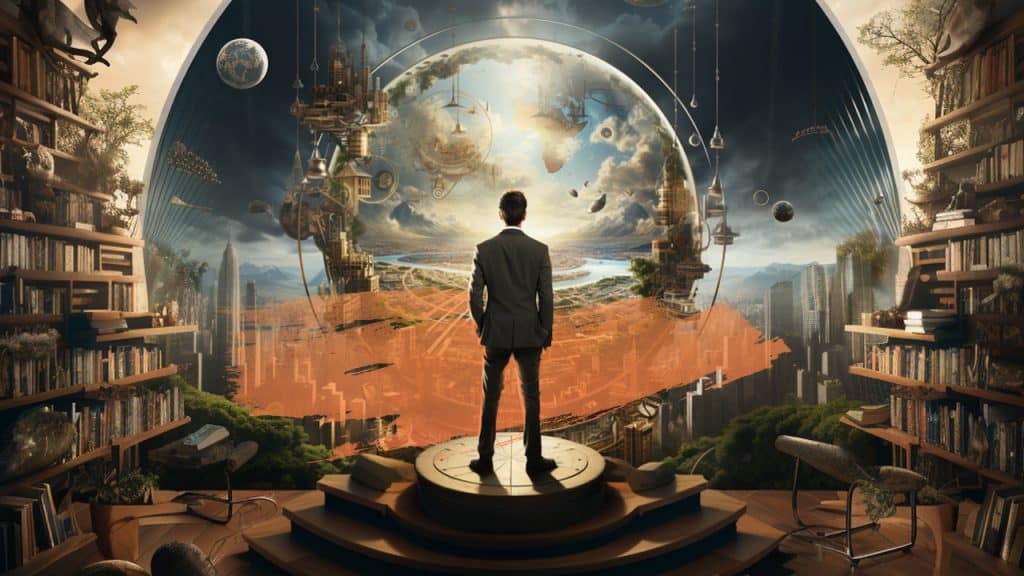
In a world inundated with data and technology, a distinguishing factor lies not in possessing advanced AI tools but in how these tools are employed. True creative executives transcend the constraints of traditional business paradigms. They’re not just about numbers and bottom lines; they are visionaries who dare to rethink, reimagine, and reinvent.
The definition of a ‘creative thinker executive’ transcends the mere ability to generate novel ideas. It’s about seeing patterns where others see chaos, forging connections between seemingly disparate concepts, and taking calculated risks to break new ground. It’s about ideating prompts beyond the ordinary, leading to more prosperous, profound AI-generated content and insights.
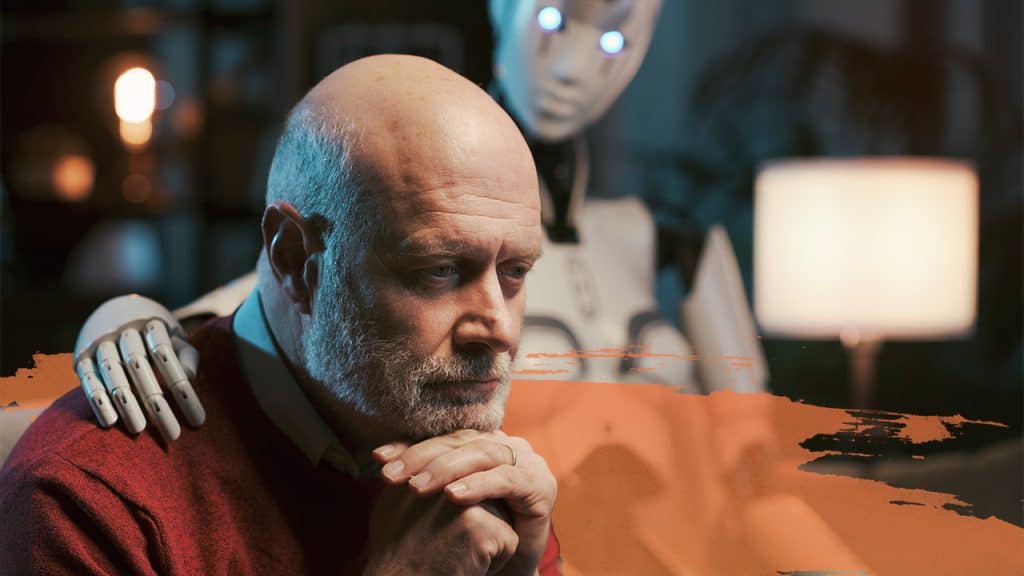
While AI can process vast amounts of information at unparalleled speeds, it lacks inherent creativity. Herein lies the symbiotic relationship between AI and the executive creative thinker. AI provides the raw power and speed, and the creative executive molds this into innovative strategies, products, and services.
In the realm of AI, this translates to envisioning uses of technology that many can’t yet fathom. Consider the example of chatbots. The standard use case is for customer service, answering FAQs, or guiding and informing website visitors. However, a creative executive might reimagine them as brand storytellers, weaving narratives that engage and enthrall prospective clients and customers.
Challenges and Opportunities in Nurturing Executive Creativity
In today’s dynamic corporate landscape, maintaining traditional structures and rigid hierarchies can inadvertently hinder the innovative drive of creative executives. These forward-thinkers thrive on challenging the status quo yet can be constrained by long-established corporate norms.
Ensuring the continuous engagement of these pioneering leaders is crucial. Given the trend of diminishing executive tenures in our fast-paced business world, it becomes essential to craft an environment that not only stimulates their distinctive mindset but also fervently preserves it. Failure to do so risks driving these strategic visionaries towards arenas that genuinely appreciate and cultivate their transformative insights.
However, where there are challenges, there are also immense opportunities. By recognizing the intrinsic value these creative minds bring, especially in the realm of AI, businesses can foster a culture that cherishes and cultivates this creativity. This means minimizing bureaucratic hurdles, facilitating open dialogues, encouraging risk-taking, and investing in continuous learning opportunities tailored for them.
Firms like N2Growth have recognized this paradigm shift. Our modus operandi isn’t just about matching skills with job descriptions. It’s about aligning visionary leaders with forward-thinking companies, ensuring a synergy that propels both the individual and the organization to new heights. Through our unique leadership assessments, we identify innate behaviors, thinking patterns, and decision-making processes, ensuring a holistic match.
The future business landscape is not just about having AI; it’s about harnessing its power innovatively. And at the heart of this innovation lie our brilliantly creative executives.
Future Outlook: Where AI and Executive Creativity Intersect
With AI trends predicting a seismic shift in business dynamics, including a projected 21% net increase in the US GDP by 2030, the role of creative executives becomes ever more pivotal. They stand as the beacon, guiding businesses through the maze of AI possibilities, ensuring that human ingenuity remains at the helm.
Fusing AI and Executive Creativity for Future Success
In summation, while AI’s capabilities are vast, the creative minds in the C-suite will determine how effectively and innovatively these are leveraged. As businesses chart their course in this AI-infused era, prioritizing and nurturing executive creativity will be the linchpin of unprecedented success.
Invest in these visionary leaders, create an environment where their creativity thrives alongside AI, and witness the dawning of a transformative business era.













 English (United States)
  English (Canada)
  English (UK)
  Spanish (Spain)
  Spanish (Mexico)
  Spanish (Chile)
  French
  Portuguese (Brazil)
  Portuguese (Portugal)
  Dutch
Dutch