

By Mike Myatt, Chief Strategy Officer, N2growth

I was skimming through headlines on my RSS feed this past weekend when a particular title caught my eye – it simply read: “Situational Ethics.” Have we really devolved to this level of thinking? Situational Ethics – Really? If ever there was an oxymoron this is it. While this phrase seems to be getting play in some circles, my opinion is that it’s nothing more than the latest politically correct sound-bite which attempts to rationalize and justify wrong thinking and wrong behavior. Life is full of areas that benefit from flexibility, fluidity, context, and other forms of nuanced thinking, but ethics isn’t one of them. If the title of today’s post seems a bit rigid for you, I encourage you to read on and see why rigidity in certain areas can be highly productive.

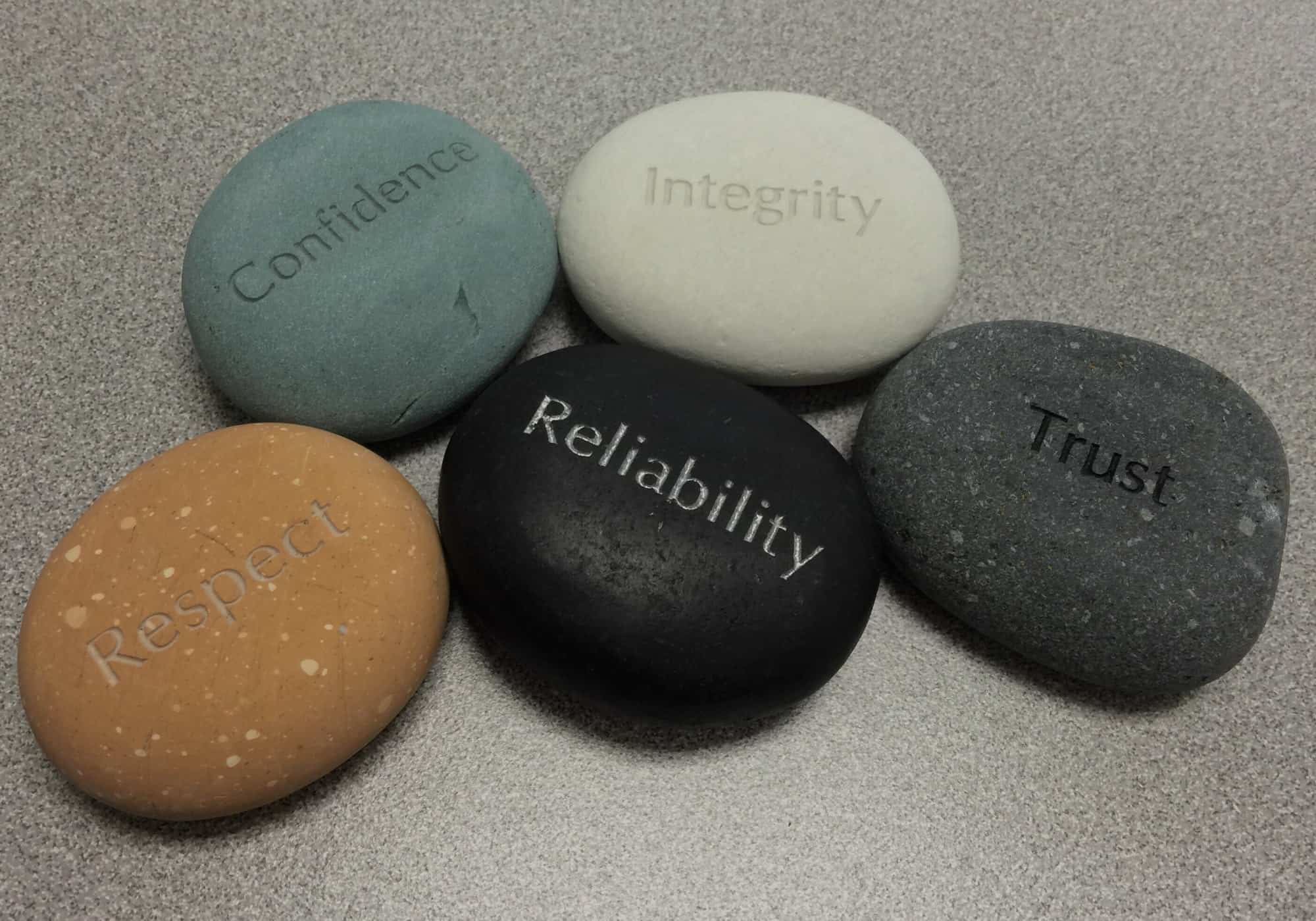
Here’s the thing – leadership begins and ends with trust. Trust is built on a foundation of the constancy of your character, and if your ethics are situational, then I would submit so is your character. You cannot effectively serve those you lead if you fail to earn and keep their trust. I would challenge you to view those whom you might label as black and white not as lacking sophistication, but as possessing a clear view of right and wrong. People who display the clarity and confidence to consistently do the right thing regardless of the current situation have reached a level of leadership maturity to be applauded not mocked.

I want to be clear – situational or contextual leadership is not the same thing as applying situational ethics. The former asks a leader to adapt strategy or tactics while the latter asks the leader to adapt principle – big difference. I would suspect that those who apply situational ethics in their thinking also likely subscribe to the theory of moral relativism. They believe anything can be justified or rationalized by the need at hand, or worse yet, manipulated for a desired outcome. While some might believe this constitutes right thinking, I believe it constitutes flawed thinking. Thinking that supports a means to an end mentality is dangerous and ultimately should not be trusted.

If you pay close attention to those who practice situational ethics you find them to be masters of spin, who while often appearing to do things right, often fail to do the right thing. People who fall into this camp frequently exhibit an inconsistency in their reasoning and/or positioning. While they would describe themselves as flexible, fluid, and open-minded, my take is that their character lacks integrity and can be easily influenced. When a person allows popular opinion, or situational characteristics to either define or supersede their principles, then I suggest their character is flawed. Simply put, my contention would be that if you serve as your own moral compass, your character will only be as good or bad as your thinking at that time.

It was Ralph Waldo Emerson who said, “Character is higher than intellect.” I could not agree more with Emerson as virtually anyone can develop their intellect, but it is the rare person who can retain their character. Emerson clearly understood the law of scarcity in placing more value on character. The most successful business leaders of our time have built their personal brand by consistently exhibiting strong character regardless of the situation at hand. They let right thinking, right decisioning and right acting serve as their guide. If you have to manipulate the truth or compromise your values to gain an advantage, the advantage is not worth the perceived gain, for any advantage gained in deceit will surely come at a very high cost - the sacrifice of your character.

Do you have to be perfect to be a leader? Absolutely not – as much as some won’t want to hear or admit it, we all have character flaws. The thing is, character flaws don’t necessarily equate to a lack of character – this isn’t situational rationalization, it’s a fact. We all have chinks in our armor, have had lapses in character, and have at one point or another broken trust with someone. We know how it feels to hurt and be hurt. The issue is not one of perfection or flawless character, but rather understanding our flaws and working diligently to have them be the rare exception and not the rule. The real trick is to focus on issues larger than ourselves. Real leaders understand that leadership has little to do with them – they are simply role players who have a job to do. In order to do that job well they must focus on something bigger than themselves, serve those around them, and not let their ego, pride, and arrogance overshadow their humility and empathy.

Bottom line, if you want to avoid falling on your face – avoid slippery slopes. Thoughts?

  • Rkbenken

    Hi Mike,

    “Truth can hardly be expected to adapt herself to the crooked policy and wily sinuosities of worldly affairs, for truth, like light, travels in only straight lines.” – Charles Caleb Colton, ‘Lacon’

    Your post was like a laser cutting through the fog of duplicity. Well done!

    Ron

    • http://www.n2growth.com/blog Mike Myatt

      Thanks Ron…I always appreciate your insights and kind words.

  • http://asimpleguyblog.blogspot.com Dan Collins

    Those who advocate situational ethics, funnily enough rarely admit to doing so.
    However when difficult or trying situations arise they default to an ‘ends
    justifies the means’ solution. To compound this some then rationalize this
    behavior with their intellect. A slippery slope as you so clearly state. As
    human beings we can pretty much convince ourselves of anything – isn’t that the
    real problem? Excellent post Mike.

    • http://www.n2growth.com/blog Mike Myatt

      Hi Dan:

      Thanks for the comment. The problem with most people is that their desire to be right is often more important than finding the right outcome. This leads to various forms of manipulations, distortions, justifications, rationalizations, etc. I’ve fallen into this trap myself and we all need to gut-check our motivations from time-to-time. Thanks for stopping by Dan.

  • Mark Oakes

    Mike

    Kudos for tackling such an interesting topic.

    Here are a couple of rambling thoughts… :-)

    I remember my first exposure to secular humanism and situational ethics. It was as a freshman in college. Our business ethics professor (if you can believe it) presented us with a case study where we had to make life/death decisions about who should remain in a life raft with limited provisions. While we were told we wouldn’t have to make these types of decisions in business, we were told many business decisions leveraged similar thought processes. Our possible survivors included a young, healthy male & female, business leader, preacher and an elderly couple. We had to make decisions and justify our positions. 99% of the class bought this mindset hook, line and sinker. Yes, this is what the future business leaders in our class were being exposed to. I can’t make this kind of crap up! As a christian I took exception to the project but don’t remember the reprucussions.

    Situational ethics presume no moral absolutes. I, like yourself, take great exception to this notion and believe there ARE MORAL ABSOLUTES.

    Final thought… I think we need to be very careful when we glibly refute situational ethics with defense terms like integrity, character, trust, ethics, etc; unless we clearly undertand their origins and definitions. I’m not saying these terms don’t have their place, but we should be careful. All too often these terms are used as catch-all taglines to bolster the latest leadership genre or cite why leadership has gone to ‘heck in a handbasket’. Over the years I’ve asked countless people/leaders what they mean when they use one of these terms and typically get a different answer every time (or an “I’m not sure”). Translation: Terms that aren’t black/white may not adequately address the black/white moral dilemma of situational ethics

    M

    • http://www.n2growth.com/blog Mike Myatt

      Great comments and insights Mark. I also agree with your thoughts about the ambiguity of loose definitions. Some would say that character needs no formal definition and is a principle that should be universally understood by all, with anyone lacking understanding of the concept to be a person of bad character. Wouldn’t it be nice if that was so? While this line of thinking makes for a good sound bite, it hints at a rather myopic and naive view of the world. You see, much of how one defines character (good or bad) begins with their view of the world as guided by their moral compass.
      One of my favorite sayings is that “you measure a person’s character by how they act when no one is watching, and by the choices they make when they believe no one will ever know.” Regrettably, many people choose to live in two worlds…their public world, and their private world. The people who walk this fine line between the ever increasing conflicts posed by the duality of their principles are destined to suffer as a result. I agree with you in the belief there are moral absolutes.  To state there are no moral absolutes shows an inherent conflict in logic –  stating there are no absolutes is an absolute. Thanks for sharing Mark.

    • http://www.n2growth.com/blog Mike Myatt

      Great comments and insights Mark. I also agree with your thoughts about the ambiguity of loose definitions. Some would say that character needs no formal definition and is a principle that should be universally understood by all, with anyone lacking understanding of the concept to be a person of bad character. Wouldn’t it be nice if that was so? While this line of thinking makes for a good sound bite, it hints at a rather myopic and naive view of the world. You see, much of how one defines character (good or bad) begins with their view of the world as guided by their moral compass.
      One of my favorite sayings is that “you measure a person’s character by how they act when no one is watching, and by the choices they make when they believe no one will ever know.” Regrettably, many people choose to live in two worlds…their public world, and their private world. The people who walk this fine line between the ever increasing conflicts posed by the duality of their principles are destined to suffer as a result. I agree with you in the belief there are moral absolutes.  To state there are no moral absolutes shows an inherent conflict in logic –  stating there are no absolutes is an absolute. Thanks for sharing Mark.

      • Mark Oakes

        Great insights, Mike. ‘Character’ is a really a loose concept without the underpinnings of moral absolutes. I, too, have heard character defined by actions in private or when no one will ever know. Using this approach, though, Adolf Hitler and other notoriously evil people had character. Integrity is another one I hear all the time. Simply put, Integrity is the state where our words and actions mirror each other. Again, there are a lot of evil people with high integrity… I could go on and on relative to the dichotomy of the words we use and that they can be applied equally to both good and evil. What we miss in a generalized application, though, is the moral underpinning. Again, we unfortunately normalize these terms as ‘feel good’ placeholders

        I have no places to turn other than the Word to set my compass North. These are my moral absolutes and I must take them on faith and know the Spirit resonnates with what ‘right’ looks like and tweaks my conscience when I err.

        • http://www.n2growth.com/blog Mike Myatt

          First of all, you know I always appreciate your thoughts. Secondly, out of respect for your time there is no need to respond to this reply, as this could go on all day:). That said, I disagree with your Hitler analogy. Hitler may have had high integrity when it came to aligning his actions with his beliefs, but by any standard (other than his own) he had bad moral character. However if we travel this line of thinking we must begin to discuss the definition of moral standard and subjective thought (moral relativism) vs. objective thinking based upon a standard (law, religion, code, etc.). My belief is that objective reasoning will objective reasoning will lead to a constancy of character (good or bad) based upon the authority being subscribed to. An interesting topic for sure:) Thanks Mark.

  • PoulAndreassen

    The article you have presented has riddled out
    intricate structure of leadership into a simple structure. I hope other also
    understand the effectiveness of this article as well! 

    • http://www.n2growth.com/blog Mike Myatt

      Thanks for the kind words Poul – I share your hope.

  • http://twitter.com/ScottWilliams Scott Williams

    This is a great post…  I love this paragraph:

    “leadership begins and ends with trust. Trust is built on a foundation of the constancy of your character, and if your ethics are situational, then I would submit so is your character. You cannot effectively serve those you lead if you fail to earn and keep their trust. I would challenge you to view those whom you might label as black and white not as lacking sophistication, but as possessing a clear view of right and wrong. People who display the clarity and confidence to consistently do the right thing regardless of the current situation have reached a level of leadership maturity to be applauded not mocked.”

    I have always contended that leadership is about trust…  The leader trusts their people, the people trust their leader.  I have worked around some leaders with amazing potential, however they never realized their potential because of situational ethics.  People will only follow those leaders so far, because they see their actions as inauthentic.

    • http://www.n2growth.com/blog Mike Myatt

      Hi Scott:

      Thanks for your comment and your insights. I appreciated your observation that situational ethics can kill great potential – a fact many up and coming leaders need to better recognize.  Thanks again for your comment Scott. 

  • http://twitter.com/card4net ATIG

    Great post Mike,

    If we don’t understand people, we don’t understand business.
    Life’s most persistent and urgent question is,’What are you doing for others?’~Martin Luther King,Jr

    Thanks,
    Sami

Links Archives Subscribe
View Archives Subscribe with us
Copyright/Legal | Privacy | Resources | Sitemap | N2growth Blog | © Copyright 2013 N2growth - All Rights Reserved