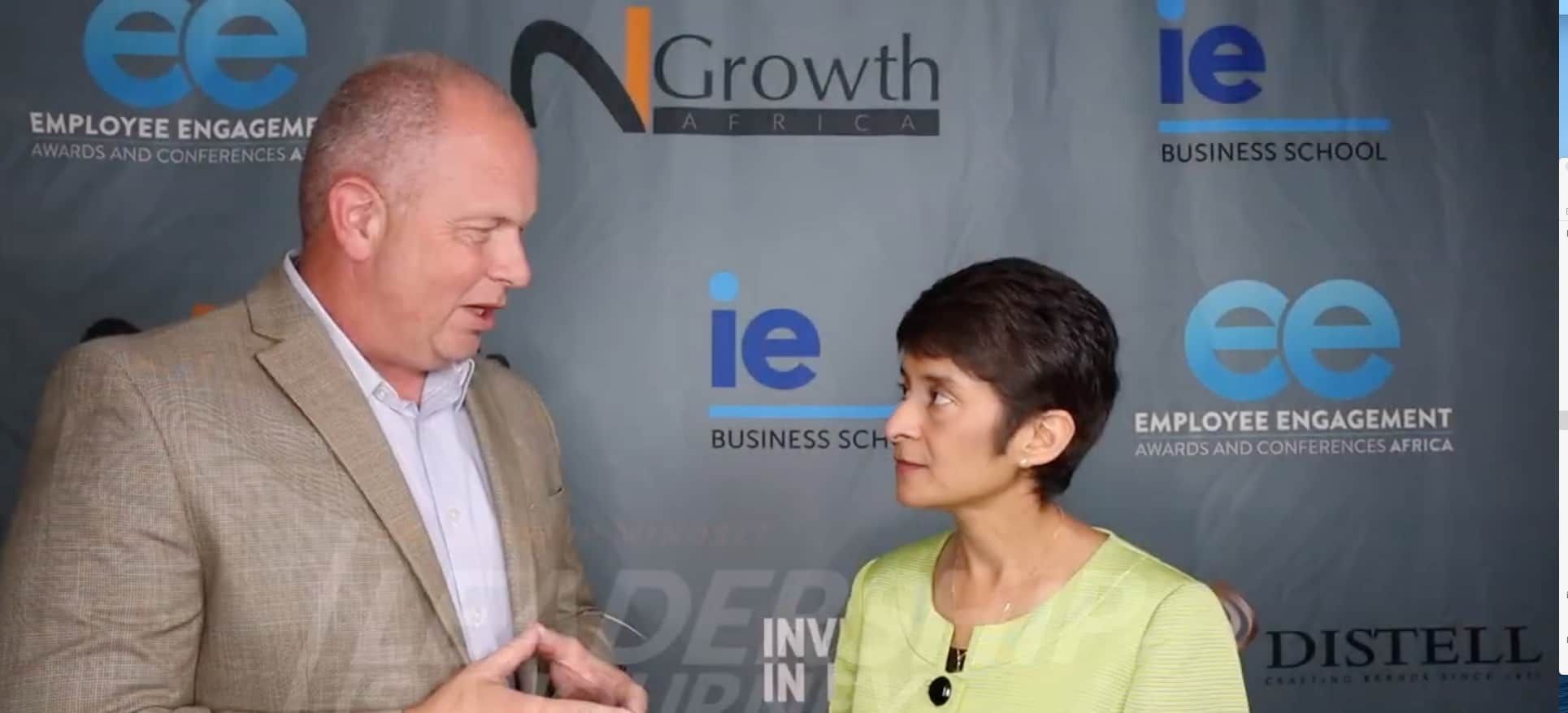


By Mike Myatt, Chief Strategy Officer,N2growth

The Problem with CoachingToday’s rant has been building inside me for a while now. The text that follows is not going to sit well with a number of those in my profession, but hey, that’s never stopped me before. During a recent interview I was asked how I felt about the coaching profession - I jokingly referred to myself as a coaching heretic, and went on to say that I really don’t like the word “coach” as a descriptor for what I do. The truth is that while I absolutely love what I do for a living, I’m not overly enamored with the industry norms and status quo. With that said, I decided to devote today’s post to providing a bit of context to the soundbites noted above. In the text that follows I’m going to share my perspective on why I believe the we need to rethink the definition of coaching…

I think it’s a healthy thing for all of us to take stock of our profession from time-to-time.  Each and every one of us needs to do a gut check on whether the industry we choose to be a part of is moving in the right or wrong direction, whether our personal efforts are contributing to the advance or decline of our profession, and in the case of coaching, the advance of decline of our clients. So I have a question for you, and I want you to be brutally honest with your answer - when you hear the word “coach” used outside the world of sports, what’s your gut reaction? Probably the same as mine - not so good.

Coaching is one of the fastest growing professions on the planet. I did a quick Google search for the term business coach and received 116 million returned results – if that doesn’t scare you it should. There is literally no barrier to entry into the coaching profession and it shows. While you need no credentialing to be a coach, you will find no shortage of organizations willing to sell you their certifications. Any number of franchised coaching offerings can be purchased at affordable prices, numerous affliliations with the hot coaching brand du jour are available for the asking, or if all else fails, coaches can just go it alone as a solo practitioner – the more the merrier right?

One of my major pet peeves with coaching is all the trifling and hair-splitting that goes on with defining what a coach is or is not. There is a real elitist attitude that pervades the industry which tends to be process oriented rather than client oriented. In my opinion this is a huge mistake. A coach is a professional who better be capable of meeting client needs and expectations by using any number of different methodologies based upon the specifics of the situation at hand. Let me be as blunt as I can – coaching is not about the coach, it’s about the client. It’s not about the process, it’s about results. It’s not about definitions, it’s about people.

Coaching is about delivering what the client needs  - it is not about a cute set of questions you picked-up during a certification class.  The problem with the coaching profession is that as a general rule it is a widely held belief (at least by coaches) that a good business coach need not have specific business expertise and experience in the same field as the person receiving the coaching in order to provide quality business coaching services. Hmmm…Furthermore, it is also generally accepted that coaching rests on the professional use of a specific range of linguistic skills such as targeted restatements and the judicious use of powerful questions with the aim to help clients shift their perspectives on an issue or ambition, and thereby “discover” different solutions and options, in order to achieve their goals.

Okay, let me see if I understand this…a good coach doesn’t necessarily need any experience, but if they’re a really good listener, can restate what their client tells them, and ask a few good questions, then they can miraculously lead a client to the ah-ha moment that transforms their life and their career. I could go on, but my guess is that you’re starting to get a sense for my frustration.

Maybe I’m old school, but attempting to provide advice and counsel to a client without having the experience of walking in their shoes is a recipe for disaster. I have had more than a few engagements that have come about as a result of the need to repair the carnage and devastation that occurred from the implementation of advice put forth, or the ideas generated by a well intentioned yet unqualified “coach”.

From my perspective a coach needs to possess the experience and track record to be whatever the client needs them to be, and to play whatever role will add the most value to the client. Coaching isn’t about esoteric definitions, scripted questions or canned processes. Rather it’s about having the time tested experience to make a difference. If as a coach, you don’t have the experience to guide someone through the varied contextual nuances and situational complexities that exist in any business environment, then you have no business pretending that you do.

As I mentioned earlier, I really don’t like the terms coach and mentor as descriptors for what I do as those labels tend to give a very limited impression of what it takes to deliver results for clients. Sure, in some cases I coach and mentor, but most of my clients simply view me as their closest personal advisor. The best coaches I know are capable of delivering a blend of personal and professional advice. They are able to play the role of ambassador, emissary, influencer, coach, facilitator, expediter, lobbyist, buffer/shield, crisis manager, negotiator, publicist, strategist, tactician, mentor, consultant, counselor, collaborative thinker and in some cases partner, based upon what the client needs.

Bottom line…good advisors make things happen and get things done at the behest of their clients for the purpose of enabling the accomplishment of anything ranging from a single task to a lifelong goal. They do what the client requires of them where qualified, and if they don’t possess the needed skill sets, competencies and experience they should not take the assignment. It’s just that simple. I don’t really care whether the client is aided by mentoring, teaching, development, training, counseling, coaching, consulting or a mix of all the above – I just care that they receive real results.

Now that I’ve stated my case, it’s time for you to weigh-in…what say you?

Related Post: The Leadership Vacuum

  • John

    Mike, I believe you are correct in that the key 'qualification' for being effective at helping others is experience and of course that is a word open to considerable interpretation. I believe also you have just kicked the elephant in the room.

    There is nothing wrong with people seeking formal qualifications or certification if it makes them feel more confident. There is no evidence I am aware of that it makes them better at helping other people.

    Coaching is at its simplest a conversation. Let's try to avoid overcomplicating a relatively simple exercise. Yes coaching is grounded in theories of behaviour but that doesnt require someone to be an expert in psychology or counselling, nor does it require the supervision processes that form a part of those professions.

    As someone who has worked with managers at all levels since 2002, coaching, mentoring, guiding, providing advice, facilitating conversations, creating space for reflection. As someone who has a life time of experience but no formal qualifications and earns a full time income from it – I feel the 'coaching' industry is at risk of proclaiming its own 'professionalism' through a set of self sanctifying qualifications and psuedo supervision which serves little purpose other than as a marketing tool of dubious value and do little to contribute to the ability of people to be effective at helping others. Despite the claims of those that support certification, I do not believe those with certification will be paid more than those without it and I do not believe the market will be fooled into believing that certification is a substitute for experience and wisdom.

    I would like to open the door and let another elephant into the room. Most coaching takes place with people open to the possibilities. Those with a closed mind either dont participate in coaching or fall by the wayside early in the day. This suggests a more significant contributor to a successful coaching outcome is a person's state of mind rather than the qualifications and skills of the coach. As you say, it is not about the coach. It is about getting the result the client wants.

    • http://www.n2growth.com/blog/ mikemyatt

      All points well taken John. Your last point about the need for an open mind is of paramount importance. If either the client or the coach has a closed mind the outcome is certain – dead on arrival. Thanks for stopping by John.

  • http://asimpleguyblog.blogspot.com Dan Collins

    Mike,

    As someone who gets pitched quite a bit by coaches, solution providers and would be sages on everything from sales tactics, process improvement, to business strategy I echo your sentiments. Here is my bottom line take. The coaching and mentoring industry is spending a lot of time talking to each other. Much like women who dress to impress other women rather than the opposite sex. Coaches are trying to one up each other with a differentiated brand or approach when they might be better served looking at who they are trying to sell.
    I have a few coaches, mentors and advisers that I cherish for their straightforward guidance and no-nonsense perspective and insight. Above and beyond their experience and credibility in subject matters they share the same compelling character traits. I would trust them to be beside me in battle and I would trust them to take care of my daughter. I believe that adviser insight and experience in subject matter is often easy to find – trusted character less so. Now a caveat – Character gets a few into the inner circle – The majority of advice and advisers will have to battle the ego of the individual they are dispensing it to.
    We all "buy" consulting so if coaches just want to transact they just need to market and burnish their brand. But for those that want to establish long term relationships I would 'advise' them to recognize that, over time, we all tend to only act upon advice, that goes against our own judgment, when the inner circle character test has been met – or when we have no other choice.

    • http://www.n2growth.com/blog/ mikemyatt

      Excellent points Dan – I really don't have anything to add as your insights and observations are absolutely spot-on. Thanks for adding to the conversation.

  • Peter A. Mello

    Call it what you will, but in the end, they are only words. Results matter.

    It's really about "leadership," another word nearly impossible to define, and "helping" which is something a little more easily understood.

    Help leaders (individuals and organizations) be more effective and get results. The rest is splitting hairs. :)

    IMHO.

    • http://www.n2growth.com/blog/ mikemyatt

      Well said Peter…I always appreciate your insights. Thanks for sharing.

  • http://www.michaelneiss.com Michael Neiss

    “Maybe I’m old school, but attempting to provide advice and counsel to a client without having the experience of walking in their shoes is a recipe for disaster. I have had more than a few engagements that have come about as a result of the need to repair the carnage and devastation that occurred from the implementation of advice put forth, or the ideas generated by a well intentioned yet unqualified “coach”.” Perfect! I take coaching assignments rarely, largely because I have been a bit disappointed in the profession. You do not have to have been the greatest executive in the field of the coachee, but you have got to understand the “game.” I find this especially true when coaches work with executives in operations. That workshop in coaching skills is a long way from the world of the factory floor. Ultimately, I agree with Peter. Its about results. And finding clients who want to achieve results, rather than put a mark in the box for HR. Sorry, this blog caused a little testiness here. :) Thanks

    • http://www.n2growth.com/blog/ mikemyatt

      You're most welcome Michael. Thanks for sharing your observations about the importance of understanding. Without understanding their are many opinions, but very little wisdom. Before sound advice can be put forth, understanding must be present, and this happens best via experiential knowledge. Thanks again Michael.

  • Mark Oakes

    Excellent post, Mike

    Throughout my career the best mentors I've had never viewed themselves as such. Whether I sought their counsel in a 'for fee' capacity or otherwise, they were first and foremost… Servants with Experience and resulting knowledge. They had already traversed the road I was traveling, knew where the potholes were and were willing to carry the lamp (or me) so I wouldn't make the same mistakes they had made… Priceless. This, my friend, can't be taught in coaching school 101

    Mark

    • http://www.n2growth.com/blog/ mikemyatt

      Thanks for sharing Mark. You make an interesting and very valid point – while much of my advice and counsel is based upon things that I have experienced lead to successful outcomes, much of it is also based upon having the first hand experience of knowing what doesn't work as well. I've never interviewed a 60 year old CEO who didn't know much more at 60 then at 50, then at 40 and so on. Maturity comes from understanding how much you don't know and aggressively seeking sound answers rather than pretending to have them when you do not. As always your observations are spot-on Mark. Thanks again for sharing.

  • http://www.aspire-cs.com Mary Jo Asmus

    Thank you for saying what needs to be said. You have echoed the unrest that I feel and hear when I talk to my colleagues in the business/executive coaching industry. I agree with you that what we do requires us to be nimble enough to provide what is needed by each of the individuals we work with – no small skill set.

    I have been contacted by missionaries and life coaches to ask me how they can work as a coach in business (presumably because that’s where the money is….). I tell them that they can’t, without experience. It is simply not right. Unfortunately, many business leaders and HR people looking to hire a coach don’t know the right questions to ask.

    • http://www.n2growth.com/blog/ mikemyatt

      Thanks for stopping by Mary Jo. Like you, I am frequently contacted by those who wish to enter the coaching field, and again like you, I believe most of this comes from people seeking financial reward as their first priority. While I certainly don't begrudge anyone a chance to make a living, I do have a distaste for those who set-off on the wrong path from the beginning. I think your observation about consumers of coaching services not understanding what questions to ask is a good one. While the following link relates to selecting a social media advisor, it offers a few points which are definitely applicable to coaching as well: http://www.n2growth.com/blog/social-media-expert-

      Thanks for weighing-in Mary Jo…

  • http://www.massimo-group.com Rod Santomassimo

    Once again Mike your "rants" are right on target. The need to walk in your client's shoes transcends all processes, practices and platforms that are being promoted in the market. Client's do not want a coach. They want results, they want to find, win and close more business, they want a sounding board, an advisory board and whether they want to admit it or not, they desire a level of accountability from a trusted peer.

    • http://www.n2growth.com/blog/ mikemyatt

      Hi Rod:

      Spoken like the true "professional coach" that you are. There is simply no way that you could do what you do Rod without having years of successful experience in your niche. You are able to produce such great results for your clients largely because you have been there, don't that, and bought the tee-shirt many times over. Thanks for sharing your insights Rod.

  • http://TruthForLifeCoaching.com Bridget Haymond

    Mike, you bring up a topic that has me dismayed for the reasons you mention. It makes me want to call myself something else as I fear non-sports related coaches and coaching is getting a bad name. Having said that, every industry has its charlatans and coaching is no different.

    However, I am a firm believer that it is why it is so necessary to have so many types of coaches who specialize in a specific area – which hopefully is their area of expertise. I have no passion for business coaching and would never put myself out there as one, even though I worked in the corporate world for many years.

    I have seen those who have multiplied thousands of followers on social media, but a look at their LinkedIn profile reveals recommendations from people who won’t use their last name… And they offer no resource for their “coach” training, except for their work experience. Many of them surround themselves with credible people in an attempt to gain their own credibility, but it took me a number of months to realize this.

    And you are right about some of the coach training schools. Some of them are in-depth and others are more like a continuing education course, which can round out knowledge and be useful – provided the strong basics are in place.

    As with all things it is buyer beware and the client should do adequate research and personally check all references and not be swayed by razzle-dazzle sites and large followings on social media.

    Honesty is a big issue for me. As a result, I have combined my knowledge, expertise, training and passion into a niche where I can offer my services with integrity. At the end of the day, results and satisfied clients tell the real story for any coach and the truth comes out eventually.

    Thanks for ranting with us ;-)

    • http://www.n2growth.com/blog/ mikemyatt

      Hi Bridget:

      Thanks for the thoughtful post. Even though it doesn't address coaching specifically, you may want to take a peek at the link I shared above with Mary Jo – http://www.n2growth.com/blog/social-media-expert-… as it describes many of the sentiments you expressed in your comment. I think your comment about online presence is an important one for people to understand in today's world. The existence or lack thereof of an extensive following on social networking platforms is no indication of competency. I've met very talented and accomplished professionals with little or no online presence, and likewise have met more than a few rogues and scoundrels with very robust followings. While it may be an indicator, marketing and branding does not in and of itself directly correspond to competency. Great insights as usual from one of the "trusted advisors" worth doing business with.

  • Doug

    Hi Mike,

    Agree completely that “coaching” is the latest prepackaged service delivered in too many cases by manufactured experts. Their method is the “one size fits all” model that is part of their paid certification. Back in grad school, we used to refer to this process as microwave management. Back then, the $99 seminar was all the fashion. Leadership in one day for $99 with lunch and 2 breaks! Thank you for busting the game and for your courage in exposing a practice that may be doing more harm than good.
    Your comment about putting the client’s need before your own is well stated. Not unlike OD, coaching is becoming one of the sexier HR areas aimed at the narcissists and is just the latest in a long list of buyer beware services available today. I blog on linked2leadership and my focus has been to beg the question of taking up the practice of our profession and as a result achieving new levels of depth that we can offer our clients in the performance improvement, HR and leadership development areas. Hope this makes sense and I very much enjoyed your post.

    Best,

    Doug Ramsey

  • Mike George

    Hello Mike
    Well i would have to say IT IS about the coach as much as the client – there is an impulse to serve and if its authentic the coach will do as much learning as the client – and they will be humbly aware of it.  If that is sabotaged by selfish commercial interests the coach will get a message pretty soon as the process will get stuck or just won’t work/flow.  So in a sense they are invoking their own lessons.  As we all are in the context of all our relationships.

    I don’t think there is a need to be protective of ‘business people’ – they are just people and if they open to allow a certain person in to their universe it just means they will have their lessons to learn too – which may include “What was i doing listening to that person?”.   All grist to the mill that fine tunes our capacity to awaken and discern!

    Ultimately it’s all projection and the thought that ‘they need help’ really just means ‘I need help’.  Ultimately coaching is just helping another – roughly translated it means i am ready to be helped myself!!  And don’t we all need help – especially those whose identity is wrapped up in business, CEO, leader etc.

    Just a game of awakening or staying sleeping!!

    Good rant though – my first time here – great conversations.

    Warmest
    Mike
     

Links Archives Subscribe
View Archives Subscribe with us
Copyright/Legal | Privacy | Resources | Sitemap | N2growth Blog | © Copyright 2013 N2growth - All Rights Reserved