
Key takeaways
The CDO role is often provisional, so boards should design it deliberately. CDO tenure is short (39% of sitting CDOs have held the role under two years, against 33% of CIOs), 64% are first-time CDOs, and no single prior role serves as a natural feeder. Sometimes that provisionality is intentional, as with a seat built for a defined transformation, but sometimes it reflects confusion about the role’s purpose and shape. Before filling the seat, boards should decide whether to make it permanent or time-bound, or whether to distribute its responsibilities across existing executives.
Combined CDO titles are the norm, but boards should let the problem define the scope, and whether it is a combined or a dedicated seat. About 26% of S&P 500 companies have a CDO, and 64% of those titles pair digital with another function, most often Information (33% of all CDOs) or Technology (17%). A standalone seat fits work that needs concentrated executive accountability, capital allocation, cross-functional decision-making, and business-model change.
Sitting and aspiring CDOs need business leadership experience alongside technical depth. More than half of CDOs hold a CS degree (52%) and more than four in ten hold an MBA (44%), and about a quarter hold both. Both shares held roughly steady between cohorts, while vendor experience rose from roughly one in six CDOs to one in four. Boards value candidates who can lead technology from a full business perspective, whatever degree they hold.
Boards look to other companies and other industries for CDOs. Two-thirds (66%) of CDOs are external hires, and 70% of those came from a different industry. Same-industry hiring fell further among recent appointments, from 33% to 24% of external hires.
Slightly over one in four companies in the S&P 500 now has a C-suite level digital officer. The role is not a universal one, but many companies see the benefits of having a single person responsible for digital operations across the company, whether to ensure strategic alignment of digital offerings across regions and units or to integrate AI into digital operations.
The questions companies face around digital, however, often make the decision of hiring and scoping the CDO position more difficult than for other C-suite officers. Should the CDO be standalone and the single point person for digital coordination, or should digital responsibility be wrapped into the mandate of a CIO or CTO? Should it be a permanent position, or should the CDO’s mandate and the position itself be time-bound and tied to specific transformation goals?
To better understand the contours of the role, particularly who boards are hiring for the position and what boards are prioritizing, we built a statistical profile of every CDO in the S&P 500. We tracked their career trajectories, credentials, and demographic information, and also compared recent hires (current CDOs appointed in 2023 and after) with longer-tenured CDOs (current CDOs appointed in 2022 or prior).
Our research findings indicate that the role often carries a certain provisionality. CDO tenure is unusually short,1 most CDOs are first-time appointees, and no single prior function dominates the pipeline. Our full white paper on the Chief Digital Officer role examines when that provisionality is intentional, when it signals a poorly defined seat, and what boards should settle before they fill it.
This report’s insights are intended to help:
1. Boards and CEOs understand the market and hiring patterns by cohort and industry
2. Sitting CDOs see how expectations for the role are changing
3. Aspiring CDOs shape their careers for the C-suite
How many companies have a Chief Digital Officer?
As digitization initiatives have matured into steady-state operations, companies have handled the CDO role in two ways. Some created the seat to deliver a defined transformation and expect to return its responsibilities to other executives once that work is done. Others kept the seat and redefined it, turning the CDO from a leader of transformation into a strategic coordinator of digital work across the company.2 AI now gives some CDOs a new transformation mandate, converting digital offerings into AI-powered ones. As with digital transformations, some CDOs appointed for that task will likely have time-bound mandates. Other roles will transition from transformation to coordination as AI eventually becomes steady-state too.
The title itself reflects the role’s evolving shape. Just over a third of C-suite officers with “digital” in their title are Chief Digital Officers only. Often, the title and remit extend to information and/or technology, indicating both that the role is not singular or universal, and that its responsibilities often overlap with those held by a CIO or CTO. In some companies the CDO reports to the CIO; in others, a single person performs both roles.
Roughly one in four S&P 500 companies has a CDO
25.8% of S&P 500 companies have a CDO. Of the 129 that do, 46 hold a standalone “Chief Digital Officer” title, and 83 hold a title that combines Digital with another C-level function. Combined titles outnumber dedicated ones by nearly two to one. That pattern is not uniform across industries. Standalone titles outnumber combined ones in Financial Services (7 to 2) and Business and Professional Services (6 to 5), while Healthcare and Life Sciences, Consumer, and Agriculture, Energy, and Natural Resources are overwhelmingly combined.3
S&P 500 companies with a CDO, by title type
Chart would be displayed here
Information is the most common function paired with Digital
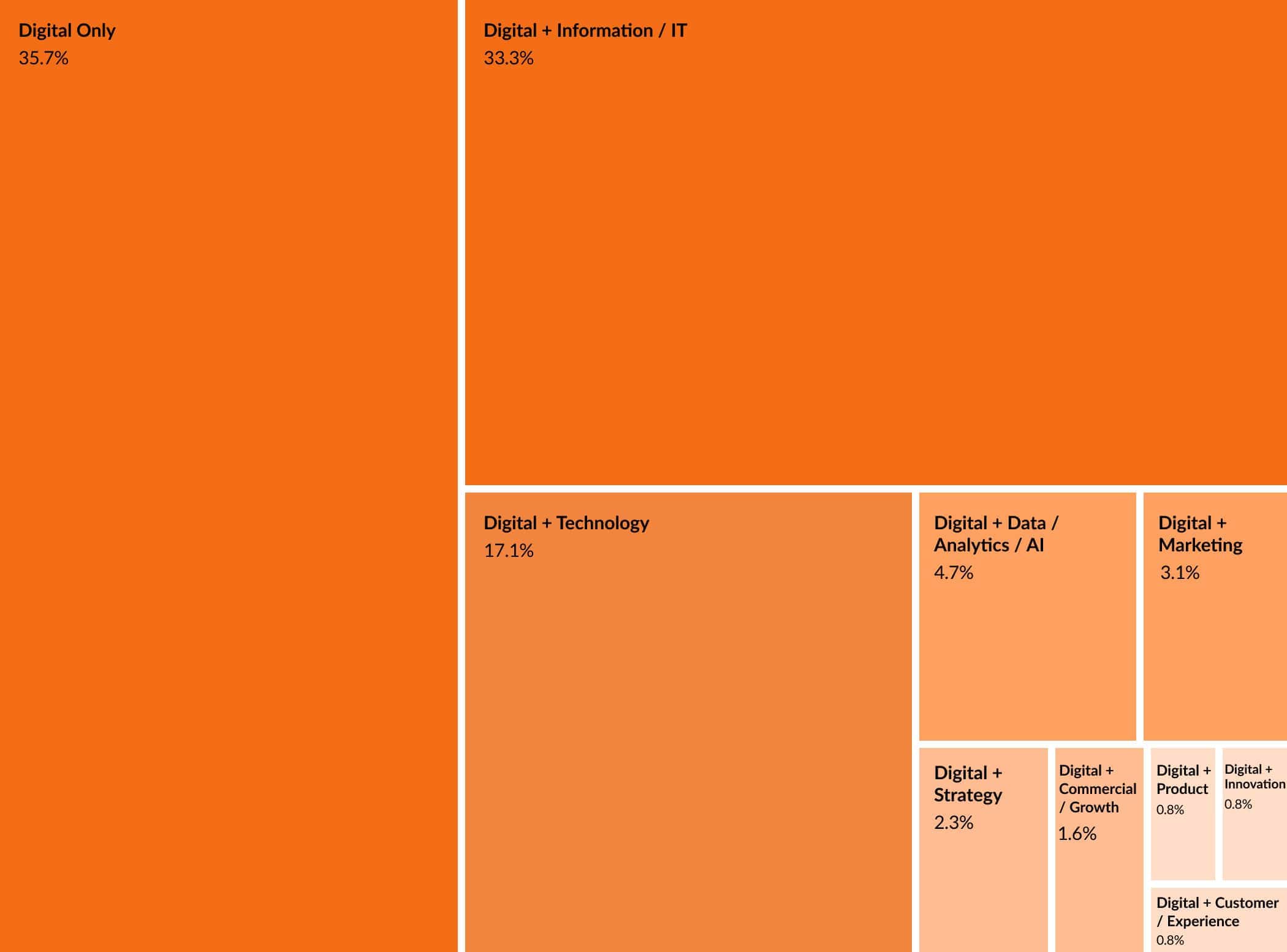
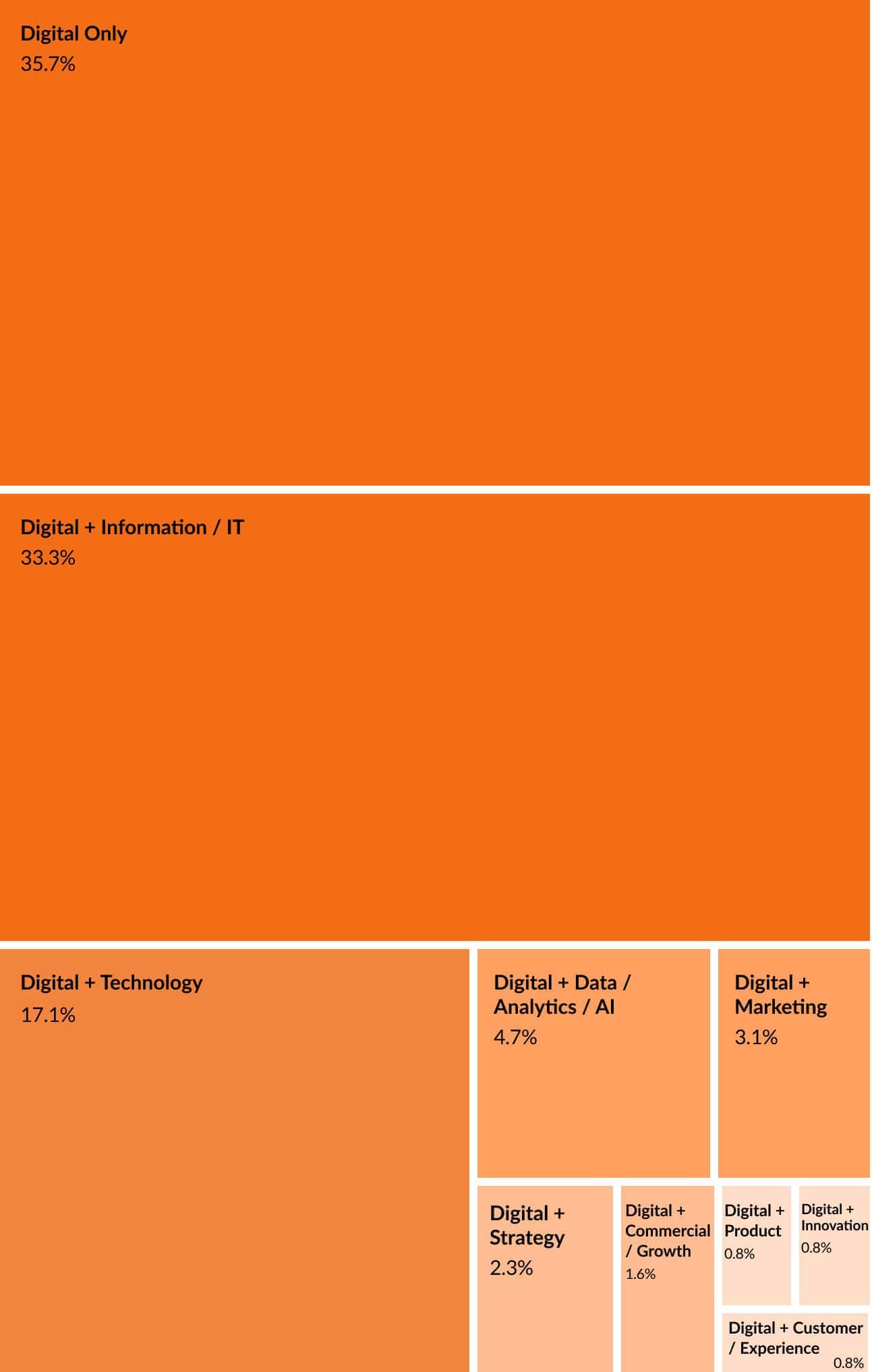
Of all 129 CDOs, 33.3% hold a title pairing Digital with Information and 17.1% pair it with Technology. The remaining combined titles are thinly spread across Data/Analytics/AI (4.7%), Marketing (3.1%), Strategy (2.3%), Commercial/Growth (1.6%), and single-count pairings with Product, Innovation, and Customer/Experience.
CDO title composition
CDO adoption varies sharply by industry
Healthcare and Life Sciences has the highest CDO adoption rate at 37.2%, followed by Consumer (31.6%), Industrials (28.6%), and Technology, Media, and Telecommunications (28.1%). Financial Services (15.3%) and Agriculture, Energy, and Natural Resources (9.5%) sit well below the S&P 500 average of 25.8%.
CDO adoption rate, by industry
Chart would be displayed here
Agriculture, Energy, and Natural Resources (n=42 total, n=4 with CDO) is a small absolute count in the with-CDO column. The 9.5% figure is directionally reliable but individual movements in this industry will register as large swings.
How long do Chief Digital Officers stay in the role?
CDO tenure is unusually short,4 the clearest expression of the provisionality described at the top of the report. That shortness has more than one cause. In some companies it reflects a lack of clarity in the role or misaligned remits and ownership, and CDOs are brought in who either fail to meet the hiring firm’s expectations or move on out of frustration at not being empowered to move the organization. In others, the seat was created to carry a defined body of work and was never meant to be permanent. As we discuss in the action items, boards and CEOs need a clear sense of what they want the CDO to achieve, how the role fits into the organization, whether it carries the ownership required to deliver, and whether it is meant to last.
Nearly two in five CDOs have held the role under two years
39.4% of CDOs have been in their current role for less than two years (18.9% under one year, 20.5% between one and two years). Another 22.8% are in the 3–5 year bucket, and 12.6% have crossed seven years. The overall tenure distribution skews toward recent appointments.
Current CDO tenure distribution
Chart would be displayed here
Current tenure is the number of years held in the current CDO role as of the dataset cutoff.
Most CDOs spent only a few years in their prior role
39.8% of CDOs spent less than three years in the role immediately prior to their CDO appointment; the largest single bucket is 3–5 years at 37.5%. Very few (8.6%) spent more than seven years in their prior role.
Prior role tenure distribution
Chart would be displayed here
CDO tenure varies sharply by industry
Current-role median tenure ranges from 1.8 years in Consumer to 5.3 years in Industrials, a spread of over three years. Prior-role median tenure clusters more tightly, ranging from 2.4 to 4.0 years across all industries.
Median tenure, current and prior role, by industry
Chart would be displayed here
Medians use CDOs with known tenure, so Consumer (11 of 12) and Technology, Media, and Telecommunications (60 of 61) sit one below their counts elsewhere. Subsets are small; read the 1.8-year and 5.3-year figures with caution.
External and internal CDO hires have similar tenure
External hires hold the CDO role for a median of 3.3 years; internal hires hold it for a median of 2.5 years. The 0.8-year gap is small and, given the overall tenure distribution’s skew toward recent appointments, should not be read as evidence that one appointment type lasts longer than the other.
Median current tenure, internal vs. external hires
Chart would be displayed here
External hires n=82, internal hires n=44. Two external hires have no recorded tenure and are excluded from this calculation.
Most Chief Digital Officers are first-time appointees
A striking number of CDOs are in the role for the first time,5 another marker of the role’s provisional character described at the top of the report. The high first-time rate suggests either that the talent pool is too small for a higher number of repeat appointments, or that boards and CEOs view the position as idiosyncratic enough that there is no ready-made template to draw from, and they consequently tailor their search instead.
Nearly two-thirds of CDOs are in their first CDO role
First-time CDOs account for 64.1% of appointments; repeat CDOs account for 35.9%.
First-time vs. repeat CDOs
Chart would be displayed here
External hires are mostly first-time CDOs
Among externally appointed CDOs, first-time CDOs make up 66.3%. Repeat CDOs account for the remaining 33.7%.
First-time vs. repeat CDOs, external hires only
Chart would be displayed here
First-time CDO rates run above 55% across every industry
First-time CDO rates range from 55.6% in Financial Services to 75.0% in Agriculture, Energy, and Natural Resources, with every industry above the halfway mark. No industry shows a majority-repeat pattern.
First-time CDO rate, by industry
Chart would be displayed here
Agriculture, Energy, and Natural Resources (n=4) and Financial Services (n=9) are small subsets and should be interpreted with caution.
The first-time share has barely moved between cohorts
First-time CDOs made up 66.1% of appointments before 2023 and 64.3% in 2023 and after. The 1.8-point difference is within the statistical noise.6
First-time vs. repeat CDOs, before 2023 and 2023 and after
Chart would be displayed here
What roles do CDOs hold before their appointment?
Unlike most C-suite roles, the CDO chair does not have a dominant feeder function, another sign of how provisionally the role is defined. The relatively balanced spread among IT general leadership, non-IT business leadership, transformation and strategy, and digital and product engineering reflects the diverse set of skills and capabilities a CDO needs.7 Success in the role calls for the ability to work cross-functionally, the business acumen to deliver results that are often core to strategy, and the IT chops to understand the possibilities and limitations of various technologies. Yet the same spread also reflects ongoing uncertainty in the market about which prior experience best prepares a candidate for the seat.
No single function dominates the CDO pipeline
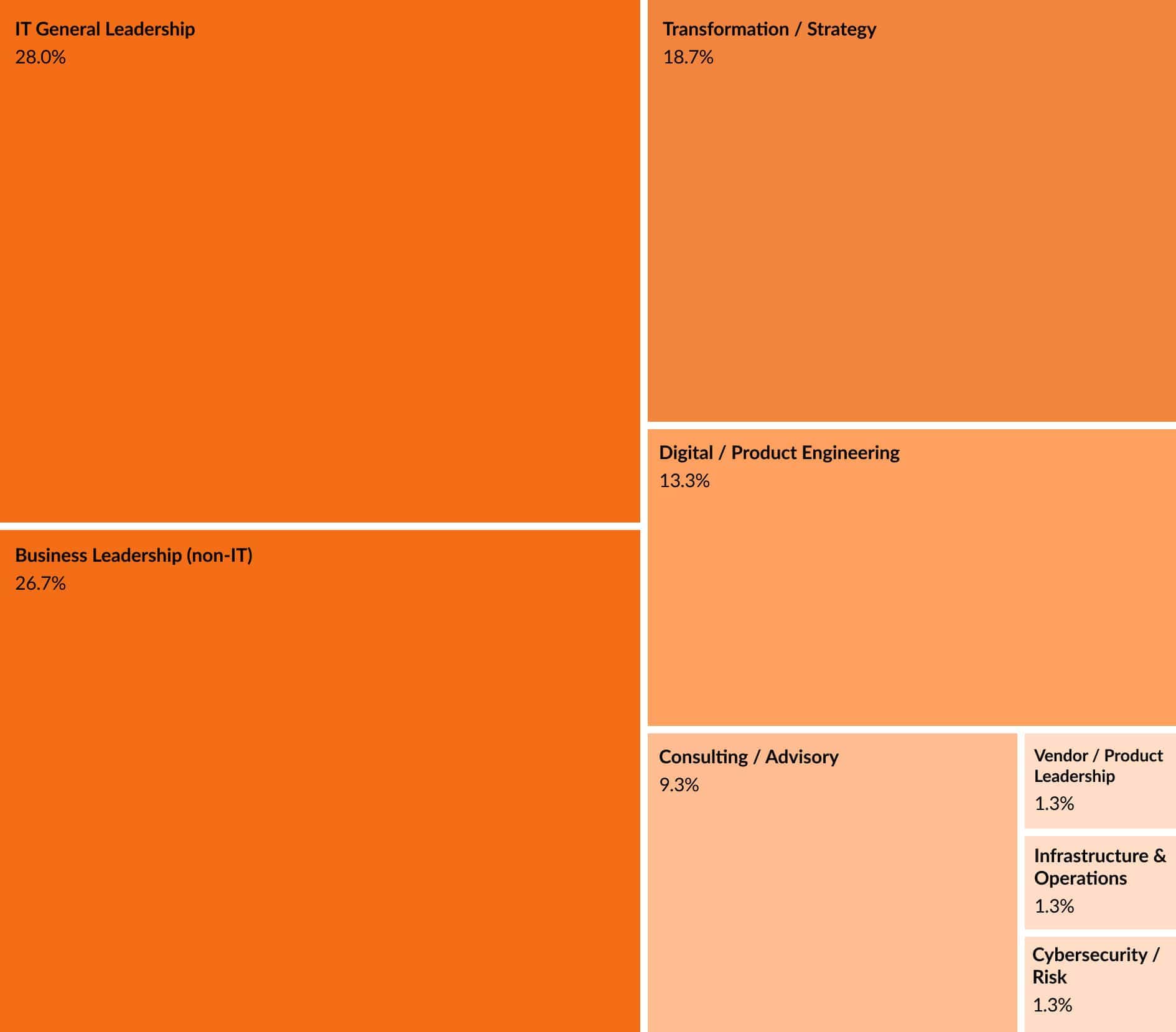
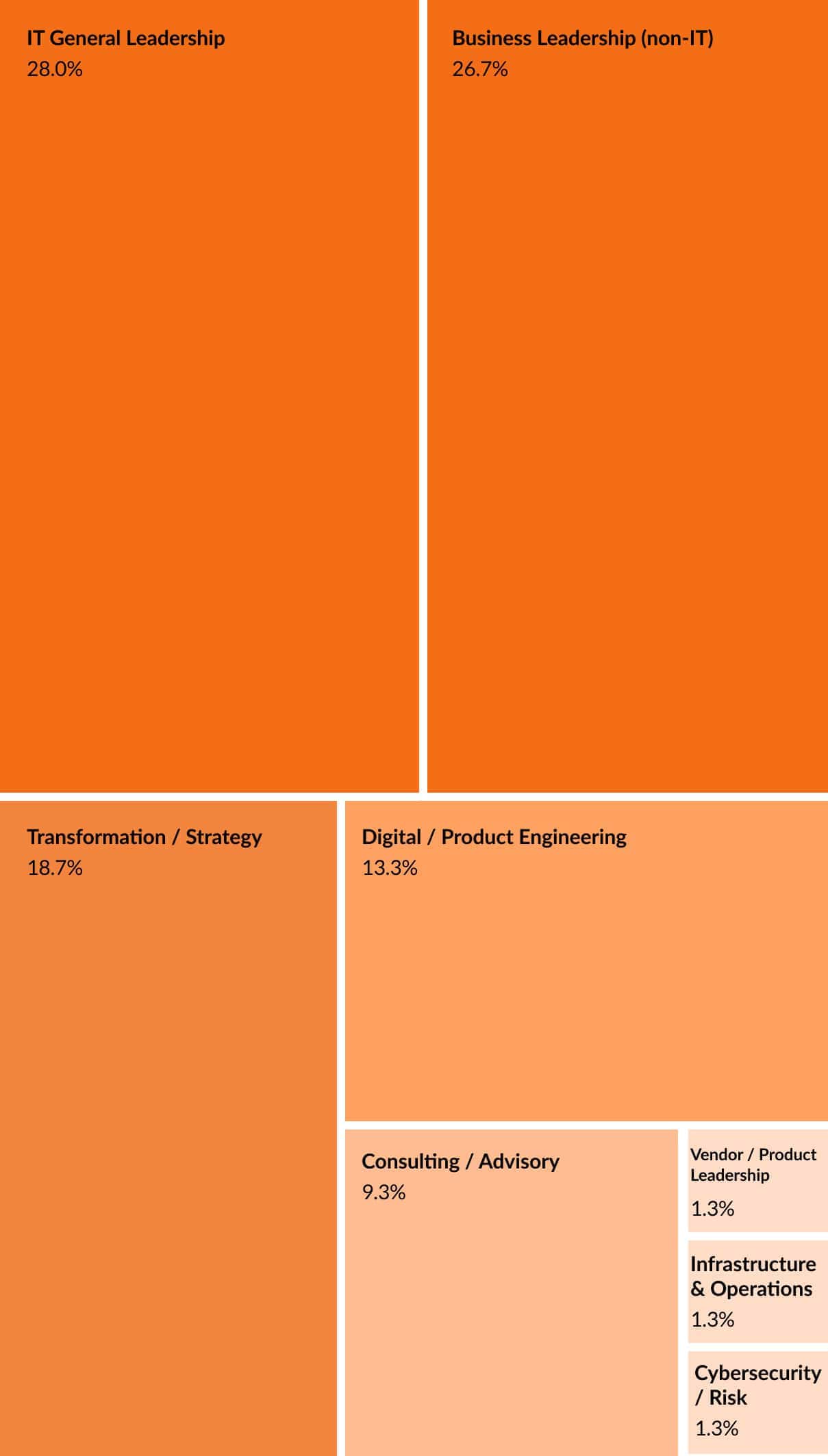
Among first-time CDOs, IT general leadership is the largest single pathway at 28.0%, closely followed by business leadership (non-IT) at 26.7%, transformation and strategy at 18.7%, and digital and product engineering at 13.3%. Consulting and advisory accounts for another 9.3%, with the remaining pipeline distributed across vendor and product leadership, infrastructure and operations, and cybersecurity and risk. Unlike other C-suite pipelines that concentrate in one or two dominant functions, the CDO pipeline is distributed.
Share of first-time CDOs by prior role family
Consulting backgrounds rose among recent first-time CDOs
IT general leadership held roughly steady (26.5% before 2023 to 29.3% in 2023 and after), as did transformation and strategy (17.6% before 2023 to 19.5% in 2023 and after). The largest cohort movements are digital and product engineering, which fell from 17.6% to 9.8%, and consulting and advisory, which rose from 2.9% to 14.6%.
Prior role family, first-time CDOs, before 2023 and 2023 and after
Chart would be displayed here
Cohort cells are small (n=34 and n=41). Movements of a few percentage points reflect only one or two individual CDOs and should be interpreted with caution.
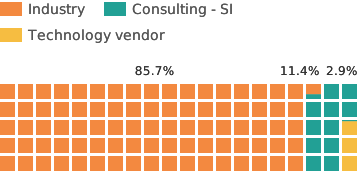
Most first-time CDOs came directly from an industry employer
Of first-time CDOs with a classified pre-CDO employer type, 85.7% came directly from an industry employer. Consulting and system-integration firms supplied 11.4%, and technology vendors supplied 2.9%.
Pre-CDO employer type, first-time CDOs
Do companies hire CDOs internally or externally?
Perhaps because there is rarely a natural promotion line to the CDO, companies hire externally more often than internally. Given the typically short tenure of CDOs, however, this preference for external candidates may reflect the search for “unicorn” candidates who can do it all. External candidates may look more attractive since less is known about them, thereby allowing the hiring committee to wishcast for qualifications that are, in practice, nearly impossible to meet.
External hires account for two-thirds of CDO appointments
External hires account for 65.6% of appointments; internal promotions account for the remaining 34.4%.
Internal vs. external hires
Chart would be displayed here
No industry favors internal CDO promotion
External hiring runs highest in Industrials (75.0%) and Business and Professional Services (72.7%), and is closest to even in Agriculture, Energy, and Natural Resources (50.0%) and Consumer (58.3%). No industry favors internal promotion.
Internal vs. external hires, by industry
Chart would be displayed here
Agriculture, Energy, and Natural Resources (n=4) and Financial Services (n=9) are small subsets and should be interpreted with caution.
Recent CDO hires include more internal promotions
External hires fell from 68.4% of appointments before 2023 to 62.3% of appointments in 2023 and after, a 6-point move toward internal promotion. The move is directional, but the cohort bases are small (n=57 and n=69) and should be read with caution.
Internal vs. external hires, before 2023 and 2023 and after
Chart would be displayed here
IT general leadership supplies the most CDO hires
IT general leadership is the leading source for both paths, at 32.5% of external hires and 34.1% of internal appointments. Beyond that, the two paths diverge. External hires come more often from business leadership (non-IT) (28.6% vs. 17.1%), while internal appointments come more often from transformation and strategy (29.3% vs. 15.6%). Consulting and advisory backgrounds are also more common among external hires (9.1% vs. 4.9%).
Prior role family, external hires vs. internal hires
Chart would be displayed here
Chief Digital Officer education and vendor experience
The challenge of the CDO is that the role calls for both technical depth and business acumen, and no single credential profile has emerged to meet it. About a quarter of CDOs hold both a CS degree and an MBA, and nearly a third hold neither. In aggregate, the profile is graduate-level, with 66.7% holding a master’s degree or higher and CS degrees outnumbering MBAs 51.8% to 44.1%.8 What has shifted is experience, not credentials. The share arriving with prior vendor experience rose among recent hires, while CS and MBA shares held roughly steady.
Most CDOs hold a graduate-level credential
Among CDOs with a known degree level, the MBA is the most common highest degree, at 40.0%. Combined with other master’s degrees (20.8%), master’s-level credentials account for 60.8%. Bachelor’s-only degrees account for 33.3%, doctorates for 5.8%.
CDOs by highest degree earned
Chart would be displayed here
CDOs may hold degrees at more than one level; this chart categorizes each CDO by their single highest known credential.
CS rates run high in most industries
CS-degree rates run above 40% in every industry except Agriculture, Energy, and Natural Resources, where the small subset (n=4) makes the 25.0% figure difficult to read. MBA rates are above 40% in most industries but sit below in Consumer (36.4%) as well as Agriculture, Energy, and Natural Resources (25.0%). The two industries above 50% on both credentials are Healthcare and Life Sciences (62.5% CS, 53.8% MBA) and Business and Professional Services (55.6% CS, 62.5% MBA).
26% of CDOs hold both an MBA and a CS degree.9
CS and MBA share, by industry
Chart would be displayed here
Agriculture, Energy, and Natural Resources (n=4), Financial Services (n=6 to 7 depending on credential), Business and Professional Services (n=8 to 9 depending on credential), and Consumer (n=8 for CS degree, of 12 CDOs) are small subsets and should be interpreted with caution. CS counts any CDO with a CS degree at any level. A CDO holding both a CS degree and an MBA is counted in both.
MBA share has held steady across cohorts
MBA share is 43.1% among CDOs appointed before 2023 and 43.1% among those appointed in 2023 and after. CS-degree share rose slightly over the same period, from 50.0% to 54.1%. The credential profile of recent hires closely matches that of their predecessors.
CS and MBA share, before 2023 and 2023 and after
Chart would be displayed here
Shares are calculated among CDOs with known status. MBA status is known for 51 of the 57 CDOs appointed before 2023 and 58 of the 70 appointed since; CS status is known for 48 and 61, respectively.
One in five CDOs has prior vendor experience
20.8% of CDOs held at least one prior role at a technology vendor, consulting firm, or systems integrator before their appointment.
CDOs with prior vendor experience
Chart would be displayed here
Counts roles held at any point in a CDO’s career, not only the role immediately before appointment.
Vendor backgrounds have become more common in recent hires
Vendor experience rose from 16.4% among CDOs appointed before 2023 to 25.0% among those appointed in 2023 and after, an 8.6-point rise. The absolute cell counts are small (9 CDOs with vendor experience in the earlier cohort, 17 in the later one), so the size of the shift should be read with caution even as the direction is clear.
Vendor experience, before 2023 and 2023 and after
Chart would be displayed here
Small n-counts (n=9 with vendor experience in the earlier cohort, n=17 in the later one). The direction of the shift is clear; the magnitude should be interpreted with caution.
How old are CDOs when appointed?
Recent hires are settling into their late 40s and early 50s, a meaningful shift from the profile of CDOs appointed just a few years earlier.
Most CDOs reach the role in their late 40s or early 50s
The median age at appointment is 49.5. The 45–49 bracket accounts for 29.9% of appointments and the 50–54 bracket for 35.0%, together capturing nearly two in three CDOs. Appointments under 40 (3.4%) and at 60 or older (1.7%) are rare.
Age at appointment
Chart would be displayed here
Age is inferred from public biographical sources and should be treated as approximate.
Boards are appointing older CDOs than they used to
The median age at appointment rose from 47.1 among CDOs appointed before 2023 to 51.1 among those appointed in 2023 and after, a 4-year shift. The under-40 share fell from 7.3% to 0%, and the 50–54 bracket rose from 23.6% to 45.2%. The 40–44 bracket also softened, from 25.5% to 12.9%.
Age at appointment, before 2023 and 2023 and after
Chart would be displayed here
Age is inferred from public biographical sources and should be treated as approximate.
How many Chief Digital Officers are women?
Women are underrepresented as CDOs across most industries, though their share is slowly rising. Female CDOs are more likely to hold a CS degree, but less likely to hold an MBA, though the female subset is small enough that this comparison should be read with caution.
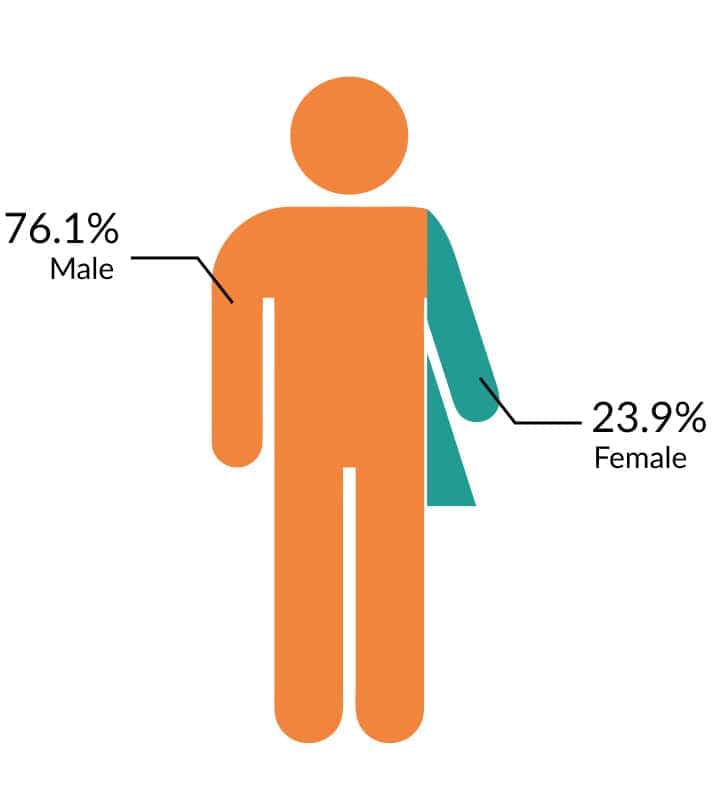
Roughly one in four CDOs is female
Female CDOs hold 23.9% of S&P 500 CDO seats; male CDOs hold the remaining 76.1%.
CDO gender breakdown
Only Healthcare and Life Sciences has a female majority
Female share ranges from 53.8% in Healthcare and Life Sciences down to 10.0% in Consumer and in Business and Professional Services, with no female CDOs among the six Financial Services CDOs whose gender is known. Healthcare and Life Sciences is the only industry where female CDOs outnumber male CDOs, at seven to six. Technology, Media, and Telecommunications, which accounts for half the CDOs with known gender, sits almost exactly at the overall 23.9% average. Industrials (28.6%) and Agriculture, Energy, and Natural Resources (25.0%) are the only other industries above it, both on small subsets.
Female and male share, by industry
Chart would be displayed here
Financial Services (n=6), Agriculture, Energy, and Natural Resources (n=4), and Healthcare and Life Sciences (n=13) are small subsets.
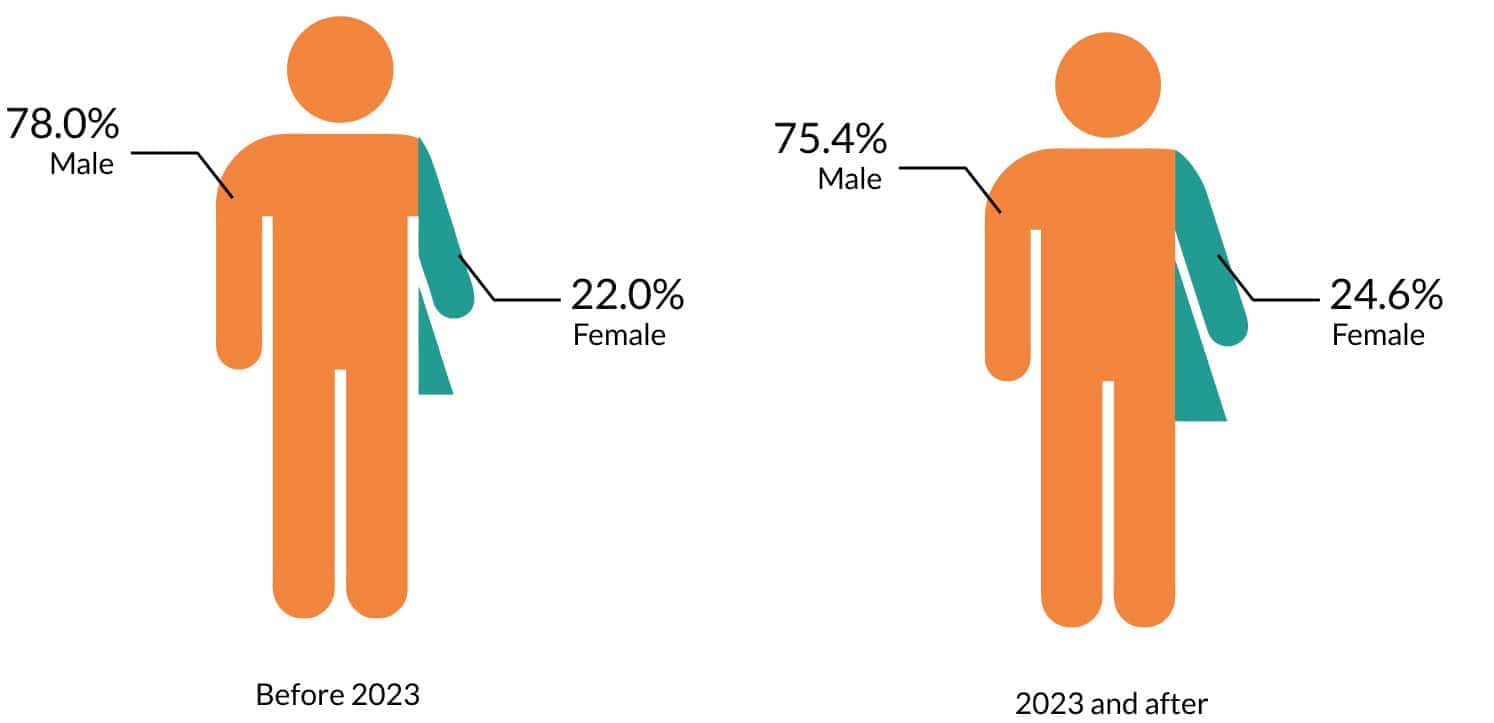
Female share is rising in recent hires
Female share rose from 22.0% among CDOs appointed before 2023 to 24.6% among those appointed in 2023 and after, a 2.6-point gain.
Gender, before 2023 and 2023 and after
Female and male CDOs differ mainly on credentials
Female CDOs are less likely than male CDOs to hold an MBA (33.3% vs. 46.8%, a 13.5-point gap) and more likely to hold a CS degree (60.0% vs. 48.0%, a 12-point gap). They are slightly less likely to be external hires (59.3% vs. 67.1%) and slightly more likely to be first-time CDOs (66.7% vs. 60.5%). Vendor experience is close between the two groups (22.2% female vs. 19.0% male).
Profile comparison, female and male CDOs
Chart would be displayed here
Female subset is small (n=27 of the 113 CDOs with known gender); figures should be interpreted with caution, particularly for finer comparisons. Credential shares rest on smaller bases still: MBA status is known for 24 female and 77 male CDOs, and CS-degree status for 25 female and 75 male.
How many CDOs have cross-industry experience?
Boards are not prioritizing industry familiarity when selecting CDOs. Cross-industry mobility is the norm, even when counting only external appointments.
Most CDOs have worked in three or more industries
82.0% of CDOs with a known career industry count have worked in three or more industries across their careers; 66.0% have worked in four or more; and 24.0% have worked in six or more. Only 7.0% have spent their careers in a single industry.
Industries CDOs have worked in across their careers
Chart would be displayed here
Most external CDO hires come from a different industry
Among external hires, 69.6% came from a different industry than the hiring company; 30.4% were same-industry moves.
External hires, same vs. different industry
Chart would be displayed here
Same-industry CDO hiring fell among recent appointments
Same-industry hiring fell from 33.3% of external hires before 2023 to 24.4% of external hires in 2023 and after, a 9-point shift toward different-industry hiring. Cohort bases are small (n=36 and n=41), so the size of the shift should be read cautiously, though the direction is clear.
External hires, same vs. different industry, before 2023 and 2023 and after
Chart would be displayed here
What’s next? Action items for boards, CEOs, and CDOs
For boards and CEOs
1. Define the digital problem and the CDO role before you begin the search. Start with whether the company needs to build the digital capability or buy it, and, if it needs to build it, whether it is building a job or a function. Only then decide whether the answer is a standalone CDO or a mandate folded into or combined with a CIO or CTO position. Nearly two-thirds of CDO titles in the S&P 500 combine Digital with another function, most often Information or Technology. Do not choose a combined title because it is common. Choose it because it matches the problem. Apply the same test to the seat you already have. Many CDO roles were created for transformation programs that have since concluded, and a remit that no longer matches its original problem is a reliable precursor to an early exit.
2. Give the CDO budget, decision rights, and defined goals. A CDO is most likely to fail where authority overlaps materially with the CIO, CTO, COO, or CMO; where the title carries no budget, headcount, or real decision rights; where the appointment is largely symbolic; or where no one has settled whether the role is bounded or permanent. Test the proposed role against all four conditions before the search opens. Settle the reporting line as part of that test. Strategic mandates need direct CEO access; mandates focused on operational integration may sit elsewhere, but the tradeoff should be deliberate. If the mandate is provisional, say so from the outset and name the conditions that would justify folding it back into the core functions.
3. Include candidates in the search who have never held the CDO title. External hires account for two-thirds of CDO appointments, and 64.1% of all CDOs are in the role for the first time. Boards cannot rely on filling the seat with someone who has already done the job. The pipeline is correspondingly broad. IT general leadership, business leadership outside IT, transformation and strategy, and digital and product engineering each supply a meaningful share, and no single function dominates. Match the background to the problem defined in the first step rather than requiring a prior CDO title.
For sitting CDOs
1. Ask for a written definition of what you own. Turnover in the position is unusually high, often the result of confused expectations, remit, lines of ownership, and/or overlapping sets of responsibilities with other technology leaders. If your board or CEO has not defined what you own, coordinate, or advise on with enough precision, ask for that in writing.
2. Lead as both a business executive and a technologist. More than four in ten CDOs hold an MBA, and more than half hold a CS degree, pointing toward a role that draws on both general business skills and technical depth. Identify your strengths and how they help you succeed in your role, while also making sure to boost areas of weakness to be able to lead digital as part of the business.
3. Build relationships with technology vendors and leaders in other industries. Vendor experience is rising in recent hires, from 16.4% to 25.0% between cohorts. Cross-industry mobility is the norm. Deliberately build relationships outside your industry and outside your current company. Your next role is more likely to be in a different industry than in the same one.
For aspiring CDOs
1. Pair your technical expertise with business leadership experience. Boards regularly turn to candidates with CS degrees or MBAs, and about a quarter of CDOs hold both. The prevalence of these degree types shouldn’t be taken as evidence of a need to obtain a certain degree, but as a sign that businesses value CDO candidates who can lead a technology function from a full business perspective.
2. Don’t be afraid to take opportunities outside your industry. 82% of S&P 500 CDOs have worked in three or more industries and 66% in four or more, and 70% of external hires came from a different industry. We do not take this as evidence that firms are avoiding candidates with inside industry experience. Instead, we see the relatively high percentage of CDOs coming into a position from another industry indicating that firms value candidates who possess the right general business and technology leadership experiences more than those who can demonstrate industry knowledge.
3. If your company has no CDO, make the case for creating one. Three-quarters of S&P 500 companies have no CDO, and roughly a third of the CDOs who do hold the title were internal appointments. Combined with a first-time rate of 64.1%, that means the seat is more often created than inherited. If you are running digital work at a company without a CDO, write the case yourself. Name the specific coordination problem that currently has no owner, the decision rights and budget solving it would require, and what the company gains by concentrating that accountability in one place. Propose it as a defined mandate with an end state rather than as a permanent addition to the C-suite. A board that will not create an open-ended seat will often fund a bounded one.
Methodology
We built a statistical profile of every C-level executive in the S&P 500 whose title included “digital” and who was in the seat at the time of the study, March to July 2026. The profile covers more than 5,000 data points across 45 analytical dimensions for all 129 Chief Digital Officers identified, and we compared those in the role before 2023 with those who entered it in 2023 and after to track how the profile is changing.
Denominators vary by chart. Each figure is calculated on the CDOs whose status is known for that attribute rather than on the full 129, so the base varies by chart and is smaller than 129 wherever status is unknown for some CDOs. Cohort comparisons are derived from tenure in the current role rather than from recorded appointment dates. Two CDOs whose tenure is unknown cannot be assigned to a cohort and are excluded from cohort views, so cohort totals differ slightly from the corresponding overall figures. Where a breakdown requires two attributes to be known at the same time, such as the combination of CS degree and MBA, the base is smaller still, and those figures will not sum exactly to the individual credential shares.
We included every C-level title with “digital” in it, whether standalone (Chief Digital Officer) or combined with another function (e.g., Chief Digital and Information Officer, Chief Digital and Technology Officer). We sourced data from company and executive directories, corporate websites, public LinkedIn profiles, and a proprietary database. Human researchers manually verified data sourced through APIs or AI scraping. Industry groupings use N2Growth’s own classification system.
FAQs
A Chief Digital Officer leads a company’s digital strategy, but the role takes different forms depending on why the company created it. Some CDOs hold time-bound mandates to deliver a defined transformation, after which other executives take over its responsibilities. Others serve as ongoing strategic coordinators of digital work across business units and regions. AI is now giving some CDOs a new mandate to convert digital offerings into AI-powered ones.
About 26% of S&P 500 companies have a Chief Digital Officer, 129 in total as of mid-2026. Adoption ranges from 37% in Healthcare and Life Sciences to under 10% in Agriculture, Energy, and Natural Resources. This study counts every C-level title that includes “digital,” so combined titles such as Chief Digital and Information Officer are included. Combined titles make up nearly two-thirds of the total.
The CDO role was created to lead demand-side change, such as digital transformation and business-model change. Research finds that CIOs focus instead on supply-side work, running the technology and operations the business depends on10. In practice the roles often overlap. A third of S&P 500 CDOs hold a combined digital and information title, and some report to the CIO. CDOs also turn over faster, with 39% in the role under two years, against 33% of CIOs.
No single path leads to the role. Among first-time CDOs, 28% came from IT general leadership, 27% from business leadership outside IT, 19% from transformation and strategy, and 13% from digital and product engineering. Most (86%) moved directly from an industry employer. Nearly two-thirds of sitting CDOs hold the title for the first time, so boards regularly appoint candidates who have never done the job.
Not long by C-suite standards. Median CDO tenure in the S&P 500 is about three years, and 39% of sitting CDOs have held the role for less than two years, against 33% of CIOs. These figures measure current tenure, the time each CDO has spent in the seat so far, so completed terms will run longer. Median tenure ranges from about two years in Consumer to five in Industrials.
No single degree is required, but most S&P 500 CDOs (67%) hold a master’s degree or higher. CS degrees slightly outnumber MBAs, 52% to 44%, and about a quarter of CDOs hold both. The MBA is the most common highest degree, held by 40% of CDOs with a known degree level. Both credential shares have held roughly steady between recent and earlier appointees.
Most are external hires. About two-thirds (66%) of S&P 500 CDOs came from outside the company, and no industry favors internal promotion. Recent appointments lean slightly more toward internal candidates, with the external share falling from 68% to 62%. External hires usually cross industries as well, and 70% came from a different industry than the company that hired them.
The biggest shifts are in who boards appoint. Recent CDOs are older at appointment, more likely to bring vendor experience, and slightly more likely to be internal hires, while their credential profile has held steady. The role also remains provisional for many companies. Tenure stays short, with 39% of sitting CDOs in the role under two years. Some companies create the seat to carry a defined transformation and expect to retire it when the work is done.
Connect with the authors behind the research

Tony Morales
Chairman
Lead Author
Chicago, IL

Armin Effendi
Managing Partner
Lead Author
Kuala Lumpur, Malaysia

Juan Carlos Gonzalez
Managing Partner
Lead Author
Mexico City, Mexico
1 Nearly 40% of sitting CDOs have held the position for less than two years, which is short compared to other technology leaders, where 33.3% of CIOs, 30.8% of CTOs, and 25.7% of CISOs in the S&P 500 have less than two years of tenure. Other C-suite positions carry similar numbers to the CIO, CTO, and CISO figures: 28.9% of CHROs and 33.1% of CFOs have held the role for less than two years (N2Growth analysis. See forthcoming N2Growth papers).
2 Sebastian Firk et al., “Chief Digital Officers: An Analysis of the Presence of a Centralized Digital Transformation Role,” Journal of Management Studies, 58(7) (2021): 1800–1831.
3 This is a lower rate of “standalone” titles than other tech leaders. In the S&P 500, 86.9% of CIOs, 85.3% of CISOs, 74.8% of CTOs, 39.1% of CAIOs, and 38.8% of CDOs (Chief Data Officers) have standalone titles.
4 See endnote 1.
5 Compare, for example, to 48.8% of CIOs, 31.4% of CISOs, and 46.7% of CFOs in the S&P 500 being first-time appointments (N2Growth analysis. See forthcoming N2Growth papers).
6 Cohort views throughout this report exclude 2 CDOs whose current tenure is unknown and who therefore cannot be assigned to a cohort. Where applicable, cohort totals will differ slightly from the corresponding overall figures.
7 Prior role family is the function each CDO held immediately before appointment, grouped into eight categories: IT general leadership, business leadership (non-IT), transformation and strategy, digital and product engineering, consulting and advisory, vendor and product leadership, infrastructure and operations, and cybersecurity and risk.
8 These shares count any CDO holding the credential at any level, and each is calculated among the CDOs whose status is known for that credential: 110 for a CS degree, 111 for an MBA. They are not comparable with the highest-degree distribution chart, which assigns each CDO to a single tier.
9 Among the 100 CDOs whose status is known for both credentials. Status is known for a CS degree in 110 cases and for an MBA in 111; the 21 CDOs with only one credential confirmed are excluded here, so this breakdown does not reconcile exactly to the overall CS and MBA shares.
10 Sanja Tumbas et al., “Digital Innovation and Institutional Entrepreneurship: Chief Digital Officer Perspectives of their Emerging Role,” Journal of Information Technology, 33(3) (2018): 188–202, at 198.
Chief Digital Officer Hiring Trends 2026: The S&P 500 CDO
Placing and advising the leaders of tomorrow
As an executive search firm, companies call upon us to find world-class talent and we deliver. But, it’s our fully integrated portfolio of leadership advisory services that sets us apart.
Contact us to learn how we can help you attract, develop, and unleash leaders.
Let's get in touch
Send us a message and a consultant will reach out shortly.
 English (United States)
 English (Canada)
 English (UK)
 Spanish (Spain)
 Spanish (Mexico)
 Spanish (Chile)
 French
 Portuguese (Brazil)
 Portuguese (Portugal)
 Dutch